
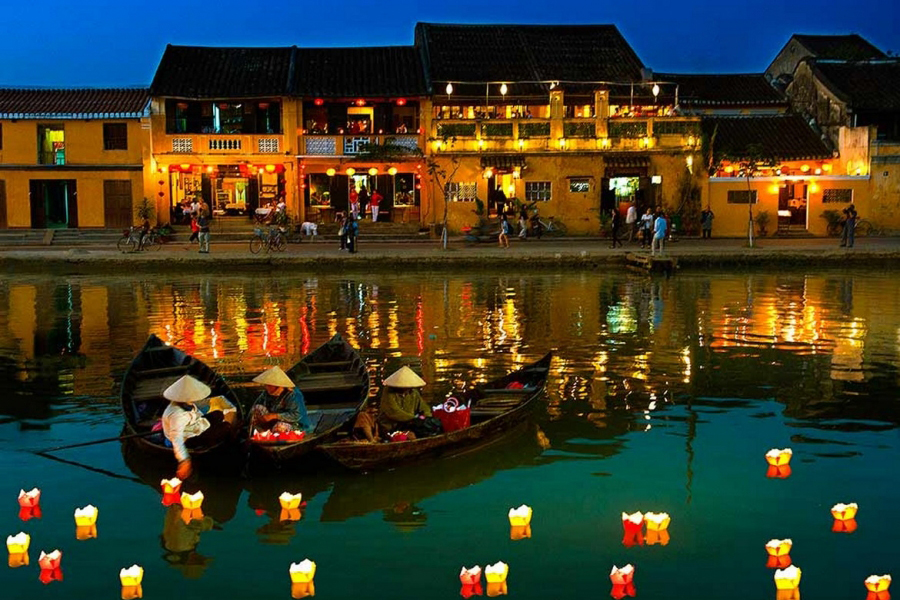
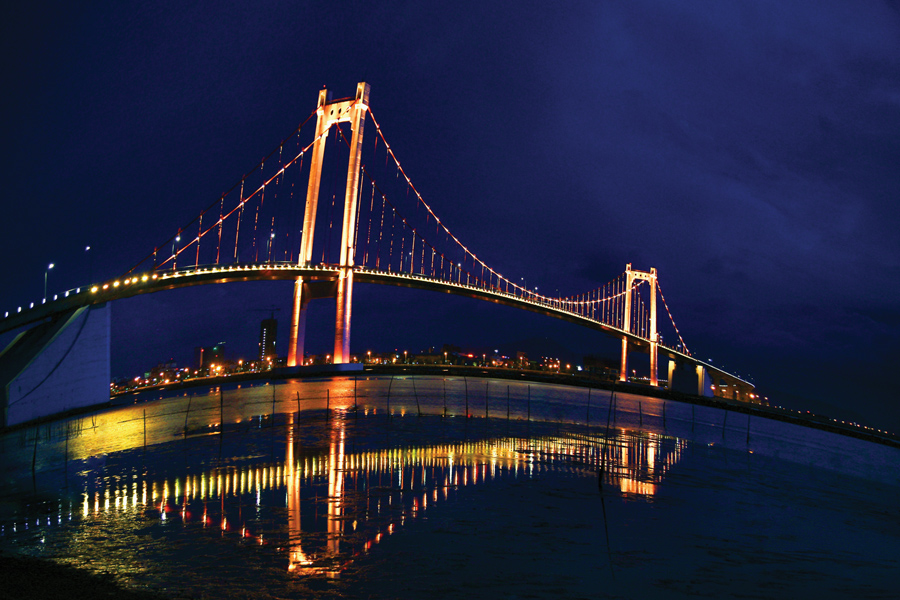
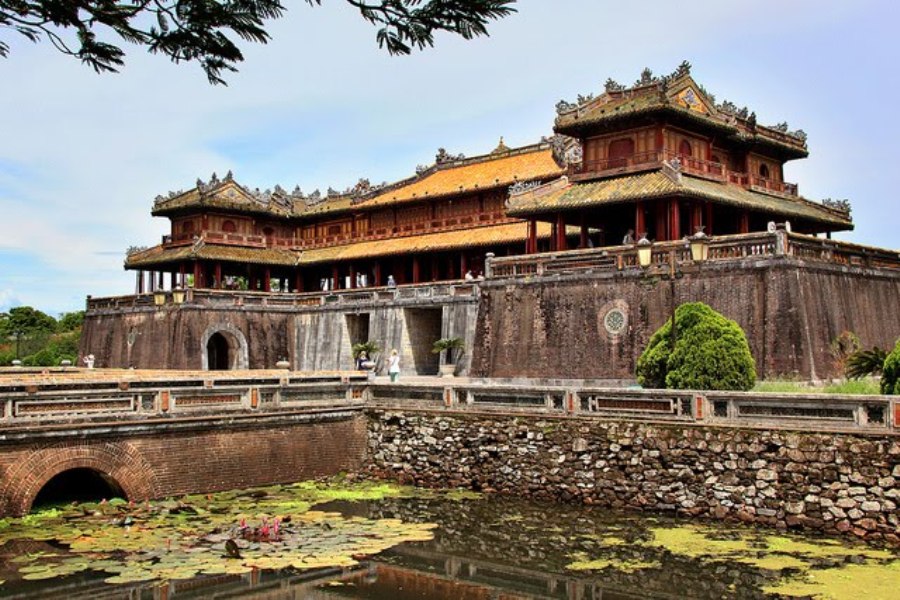
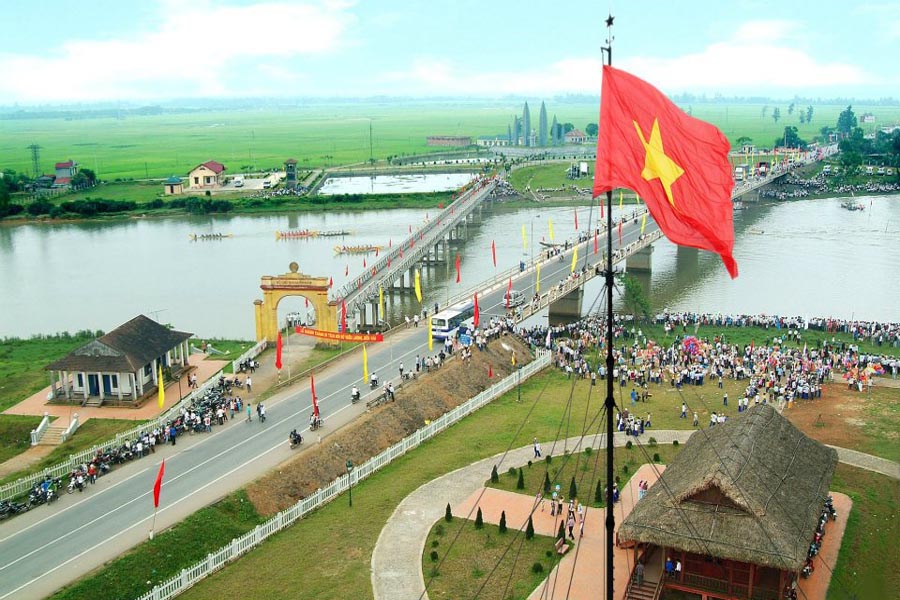
OVERVIEW: Da Nang is located at the northernmost point of Vietnam’s tropical zone, with a comfortable climate all year. The wet season lasts from August to December, whereas the dry season lasts from January to July. The highest temperature is 30 degrees Celsius, while the lowest is around 18 degrees Celsius. Da Nang is best […]
Read More...My Son Sanctuary
MY SON SANCTUARY GENERAL INFORMATION: Who built My Son? My Son Sanctuary is the group of Hindu temple built by the ancient Champa (Cham) people from 7th to 13th centuries. Thus, My Son in Quang Nam Province, Vietnam is considered as little Angkor Watt of Vietnam because of its featured architectures and historical period […]
Read More...GOLDEN BRIDGE BA NA HILLS
GOLDEN BRIDGE BA NA HILLS GENERAL INFORMATION: Lying at the height of 1,487 meter from sea level, Ba Na Hills is amazing Amusement Park in Vietnam,used to be the summer resort of the French in the 19th century. Today, Ba Na is not just summer resort but it hosts Vietnam’s indoor biggest amusement park. Tourists […]
Read More...Hoi An Private Shore Excursion
HOI AN PRIVATE TOUR FROM TIEN SA PORT In the morning, we will come to collect you at Tien Sa port and then we begin our hoi an private tour from Tien Sa port. We first head to Linh Ung Pagoda where you can admire the biggest Kwan Yin Statue in Vietnam with the height […]
Read More...My son holy land travel, why not?
My Son Sanctuary Overview Between the 4th and 13th centuries a unique culture which owed its spiritual origins to Indian Hinduism developed on the coast of contemporary Viet Nam. This is graphically illustrated by the remains of a series of impressive tower-temples located in a dramatic site that was the religious and political capital of […]
Read More...Tuong Van Pagoda
During the time of the Nguyen Lords and the Nguyen Emperors, many pagoda and tombs were built to the south and southwest of Hue, their capital city. At the time, Tuong Van was but a small temple near Tu Hieu Pagoda, about 5 kilometres southwest of the city. A stele marking the construction of the […]
Read More...Phong nha cave tour – The world’s Largest Cave
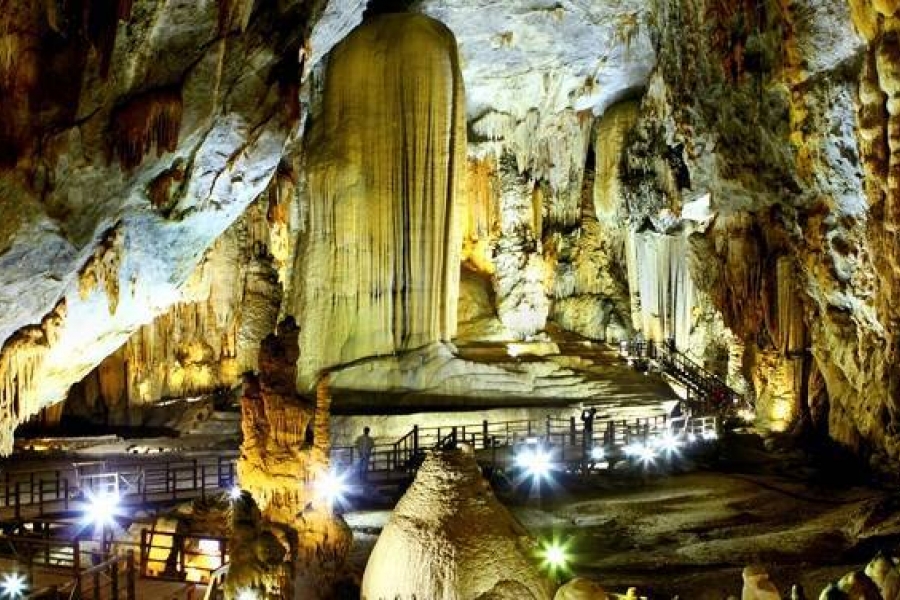
Breathtaking drone footage shows gigantic Hang Son Doong – ‘Mountain River Cave’ in amazing detail First place in the world for being the largest cave in the world belongs to Hang Son Doong in Vietnam, in Phong Nha-Ke Bang National Park, about 450 kilometers (280 miles) south of Hanoi. It is more than 8.7 kilometers (5.4 miles) long The cave was found by a local […]
Read More...Tu Hieu Pagoda
In describing Tu Hieu Pagoda, The book “Dai Nam Nhat Thong Chi” published by the National Institute of history of the Nguyen Dynasty records: “The pagoda is located in Duong Xuan commune on the site of a former temple. In the third year of the regin of Emperor Thieu Tri (1834), Cung Gian Chau Phuong […]
Read More...Dong Thuyen Pagoda
Dong Thuyen Pagoda is located at Duong Xuan Village, Thuy Xuan commune, south of Hue City. If you want to visit Dong Thuyen, follow the street from Nam Giao to Tu Duc Tomb, pass the Chau Lam pagoda to Tuong Van tower, turn left and go for more than 100 meters, then you will see […]
Read More...Thuyen Ton Pagoda
Thuyen Ton Pagoda is a big one in Hue and also the original centre of Lieu Quan school (a branch of Lam Te zen school). The great Lieu Quan came from the Cau River (Phu Khanh), then moved to Thuan Hoa at the end of the XVIIth and studied with many chinese hight-rank monks. In […]
Read More...Bao Quoc Pagoda
Bao Quoc Pagoda wasfounded by the venerable Giac Phong towards theend ofthe 17th century. It was originally called Ham Long Thien Tho tu Pagoda, after the hill on which it stands. The pagoda islocated in Phuong Duc district, close to the centre of hue, and is bordered by Dien Bien Phu street on the east, […]
Read More...Quoc An Pagoda
Quoc An Pagoda was established in 1684. Its original name was Vinh An. On the 27th day of the 5th month of the Ky Ty year (13 july, 1689), Lord Nguyen Phuc Tran bestowed the pagoda with the name Quoc An, or national Merit (“Sac tu Quoc An tu”). Quoc An has played an infuential […]
Read More...


